

“To see what is in front of one’s nose needs a constant struggle.” – George Orwell, 1946
Democrats will probably regain the House at the end of this year. They may even pick up a Senate seat or two. And if the spectacle-driven Trump administration continues to implode, they have a real shot at the White House in 2028.
On paper, this looks like success. But electoral see-sawing that depends on sucking less than the other side is not a governing strategy. It’s mastering the politics of backlash.
Both parties have perfected retribution politics. When Republicans break things, dance with authoritarianism, or mismanage the economy, Democrats lure voters back thermostatically. That’s a low bar and hardly evidence of a revitalized progressivism. Eventually, backlash politics breeds cynicism, despair, and authoritarianism. It cannot build a durable electoral majority capable of uniting broad sections of the country and governing for a generation.
The problem isn’t that Democrats can’t win. It’s that they’ve lost touch with how ordinary voters think, especially voters without four-year college degrees. Over the last 25 years, Democratic elites have built a political worldview calibrated less to common sense than to the priorities and moral language of its professional-class base.
Facing reality, especially when reality contradicts one’s preferred view of the world, is the first and indispensable job of any leader. Educated professionals often struggle with this. They are continually tempted to blur the distinction between the world they wish to build and the world that keeps showing up. They confuse “ought” and “is”. Politics requires not just morality (“should we?”) but empirics (can we? And how?).
Ruy Teixeira knows this. Teixeira is a center-left political scientist with expertise in quantitative political analysis, voting behavior, and survey research. Thanks to his training, when facts change, Teixeira changes his mind rather than wishing for different facts.1 Like me, he sits to the right of progressive activists on culture, immigration, and energy and to the left of centrists on labor power, industrial policy, and redistribution. It should come as no surprise that I admire him.
Teixeira recently wrote three Substack posts arguing that Democrats do not need better messaging or sharper attacks. They need to embrace realism in seven critical areas: energy, growth, governance, borders, fairness, biology, and country. Teixeira is right – so I’d like to summarize his thinking and add some color and polling data.
Energy Realism: All-In on Cheap Energy
For the last quarter-century, climate change has been the left’s master narrative. Fossil fuels are the villain, wind and solar are the heroes, and “Net zero by 2050” is the goal. This story plays extremely well among highly educated liberals. It plays far less well with voters who care about electricity prices, industrial jobs, and whether their heat works in February.
Europe should serve as a cautionary tale for Democrats. For more than two decades, European governments have promised voters a green win-win: cleaner air, cheaper power, and millions of green jobs. What many countries got instead were higher prices, volatile grids, and industrial decline.
Germany now has the highest household electricity prices in the developed world. Household electricity costs in the EU are roughly double those in the US (which are in turn more than twice those in China).2 Energy volatility has risen as renewables have grown. And European energy-intensive industries—from steel to chemicals to AI data centers—are quietly moving elsewhere.
Rising energy costs make everything more expensive. It is a regressive tax that hits working-class households hardest. In an era of AI, high energy prices worsen growing anxiety about disruptive technology and empower parties that frame electrification as an elite project imposed on everyone else.
Climate change is serious, but even with competent federal leadership and sustained investment, transforming a complex, path-dependent energy system takes decades. Oil and gas still account for more than 80 percent of global energy use, and every major forecast expects them to dominate world energy production for many years. Even Bill Gates has acknowledged that poverty and disease are a more serious threat than climate change.
The inconvenient truth is that oil and gas production hit record highs even under the climate-forward Biden administration. With AI dramatically increasing electricity demand and the “electric stack” of batteries, solar, and electric motors powering everything from cheaper cars to drones, affordable and reliable power is becoming ever more critical.
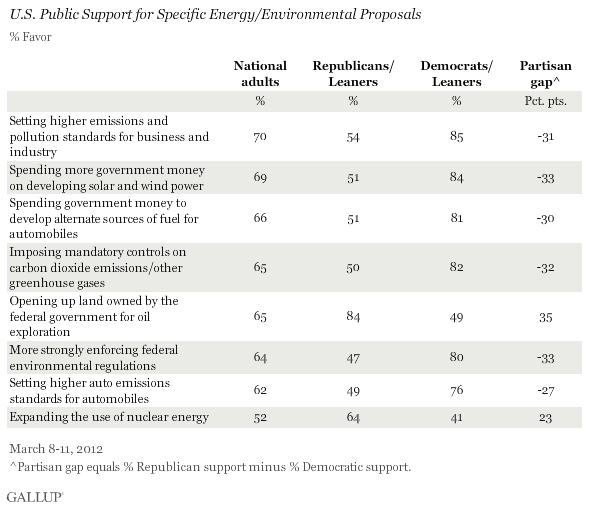
Voters have always favored an “all-of-the-above” energy strategy. They don’t want lectures or artificial supply constraints; they want the lights to stay on and affordable utility bills. The environmentally pure “green” agenda has enabled Trump to frame renewables as a utopian fantasy of West Coast eco-vegans (it is actually being pursued most aggressively by meat-eating Texans who voted for him). In search of vainglorious headlines and empty promises of cheap Venezuelan oil, Trump has polarized what should be an easy consensus around all-of-the-above solutions to deliver low-cost energy.
Growth Realism: The Key to Economic Prosperity and Security
If energy is the left’s blind spot, economic growth is its neglected child—and in some progressive quarters, its active enemy.
Over the past decade, Democratic rhetoric has shifted decisively away from economic growth and toward climate, equity, identity, and justice. One analysis of party platforms found that references to “growth” declined sharply even as mentions of climate and equity exploded. That shift isn’t just rhetorical. It reflects a deeper unease with growth itself—an influence traceable to de-growth thinking, which increasingly treats expansion, productivity, and scale as moral failures rather than social achievements.
This is a grave mistake. Growth—especially productivity growth—is the single most important driver of rising living standards. There is no durable way to make workers richer without increasing the value each worker produces. Redistribution can help at the margin, but no economy can redistribute what it fails to produce. A politics that downplays growth ends up fighting over slices of a fixed pie — a recipe for zero-sum conflict, not shared prosperity.
The power of compounding makes this concrete. Tyler Cowen has calculated that if US real GDP per person had grown just one percentage point less per year between 1870 and 1990, American living standards in 1990 would have resembled Mexico’s rather than being roughly seven times higher. Small differences in growth rates, sustained over time, are the difference between abundance and austerity.
Faster growth creates better jobs, expands opportunity, and generates the fiscal space for everything else progressives say they want: infrastructure, social insurance, climate mitigation, and public investment. Slow growth does the opposite. It hardens distributional conflict, fuels cultural resentment, and erodes trust in institutions as people sense—correctly—that the system no longer delivers.
Yet parts of the left have come to view growth as either automatic or morally suspect. Instead of asking how to raise productivity, they’ve leaned on substitutes: a green transition promised to conjure millions of jobs regardless of costs, or vast spending programs untethered from output and efficiency. Layered on top is a de-growth sensibility that treats consumption as vice, scale as domination, and technological advance as environmentally or socially threatening. These ideas are rhetorically fashionable, but empirically bankrupt. They offer no credible path to mass prosperity in a complex, aging, energy-hungry society.
Once again, the rise of artificial intelligence sharpens the stakes. If AI proves to be a general-purpose technology as valuable as electricity or the internet, it could dramatically lift productivity across the economy. That is the prize. But many Democrats seem more focused on the risks—job loss, disruption, cultural harm—than on shaping AI as a growth engine. Too often, AI is framed not as an opportunity to harness but as a crisis to manage.
That posture is backward. A party that fears growth cannot lead a modern economy. Growth realism means embracing technological change, shaping it with smart rules, and insisting that productivity gains flow to workers through higher wages, better jobs, and broader prosperity—not reflexively opposing change in the name of caution or moral purity.
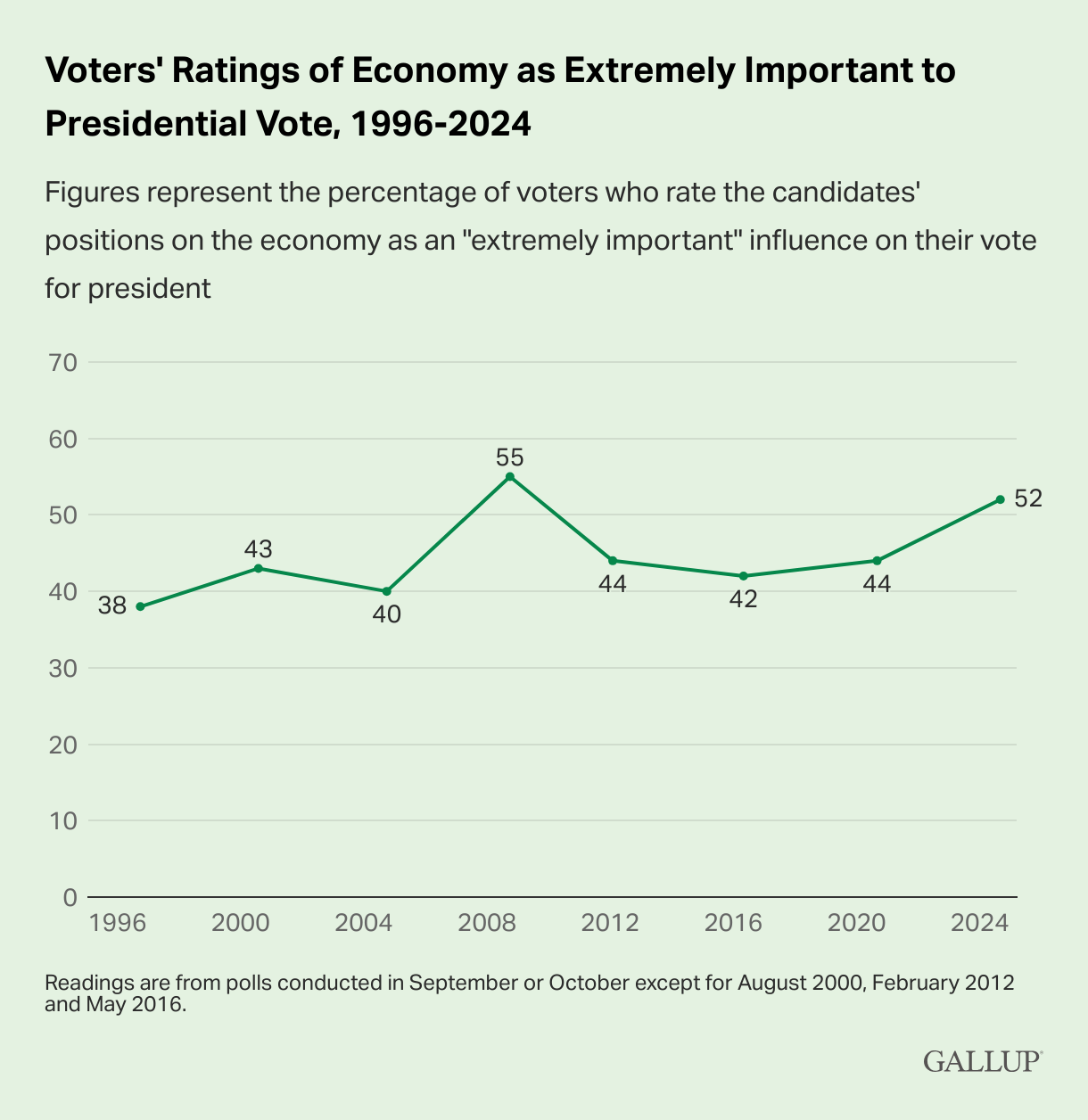
Growth realism is the only way progressives can reach voters who consistently rate “the economy” as their top concern. These voters mean prosperity, security, and the chance to get ahead, not GDP statistics. But there is no general prosperity and no lasting economic security without robust economic growth. Any Democratic project that forgets that—let alone flirts with de-growth—will and should fail on its own terms.
Governance Realism: Get it Done
Ask a typical voter which party they trust to deliver safe streets, efficient services, functioning infrastructure, and orderly public administration—and you rarely hear “Democrats.”
This didn’t happen overnight. Progressives have not always prioritized process over results, intention over execution, or well-funded NGOs over competent government leaders. But too often, they do now. The result is visible everywhere voters interact with government: slow project timelines, cost overruns, disorder, weak enforcement, and bureaucratic paralysis.
This is politically devastating. Government performance is the Democratic party’s advertisement for itself. And too often, the ad says: expensive, slow, and ineffective. And with few exceptions, the bluer the jurisdiction, the worse the problem. Those of us in the California Bay Area see evidence of this every day.
Polling data on which party voters think “gets things done” is imperfect. Most voters believe that neither party is especially effective at governing, unless the question is framed around “strong leaders,” in which case Republicans poll more strongly. If polls ask about competence as a party brand, Democrats get tagged as lacking political skill more often than Republicans do. When polls ask which party can best address what voters think is the top problem, the results are closer and can tilt Democratic depending on what people name as the top issue. 
Michigan Governor Gretchen (“Fix the Damn Roads”) Whitmer and Pennsylvania Governor Josh (“Rebuild Interstate 95 in 12 Days”) Shapiro are good examples of progressive leaders who have reordered priorities and emphasized results. For these leaders, creating jobs takes a back seat to getting the job done. They value public order and enforcement. They place a premium on speed and the effective use of technology. They attract talented people to public service and fire incompetent ones.

Governance realism is vital to any progressive future. Voters will only trust Democrats to grow the state capacity we need to build big things if Dems first demonstrate that they can run the government we already have.
Immigration Realism: End Terrible Incentives
No issue better illustrates the progressive break with reality than immigration. Joe Biden made a catastrophic mistake in allowing a massive, disorderly flood of migrants to enter the country. Americans hated it. Immigration, along with inflation, helped Trump get elected and dramatically expand deportations. It enabled him to triple the ICE budget and hire large numbers of agents who are plainly unqualified.
Across Europe and the US, weak border enforcement, porous asylum rules, and lax interior enforcement have effectively legalized all forms of immigration. This has produced a backlash among working-class voters that is both predictable and incredibly destructive.
Progressives are paying a very high price for creating terrible incentives. When the federal government stops enforcing border laws, more people will enter illegally. When asylum rules have gaping loopholes, migrants exploit them — most of us would. When states offer jobs or benefits regardless of status, they make illegal entry more attractive. And without professional interior enforcement, those who arrive expect to stay indefinitely. These incentives compound. Under those conditions, a surge in undocumented border crossings is not surprising—it is precisely what progressive policy invited.
None of this is controversial outside activist circles. Yet the left has consistently denied or minimized these realities, framing concerns about immigration as either xenophobic or economically illiterate. The result has been the rapid political collapse of working-class support for progressive politics. (Except in Denmark, which sorted this out – although Danish Prime Minister Mette Frederiksen is facing significant political challenges unrelated to immigration).

Immigration realism means restoring credibility: enforcing borders, closing loopholes, and maintaining professional, not thuggish, interior enforcement focused more on lawbreakers than people who work, pay taxes, and raise kids. If we want to expand legal immigration for people who contribute more to the US than they cost (something I strongly advocate), we need to debate it openly and approve it democratically—not smuggle people in through the back door.
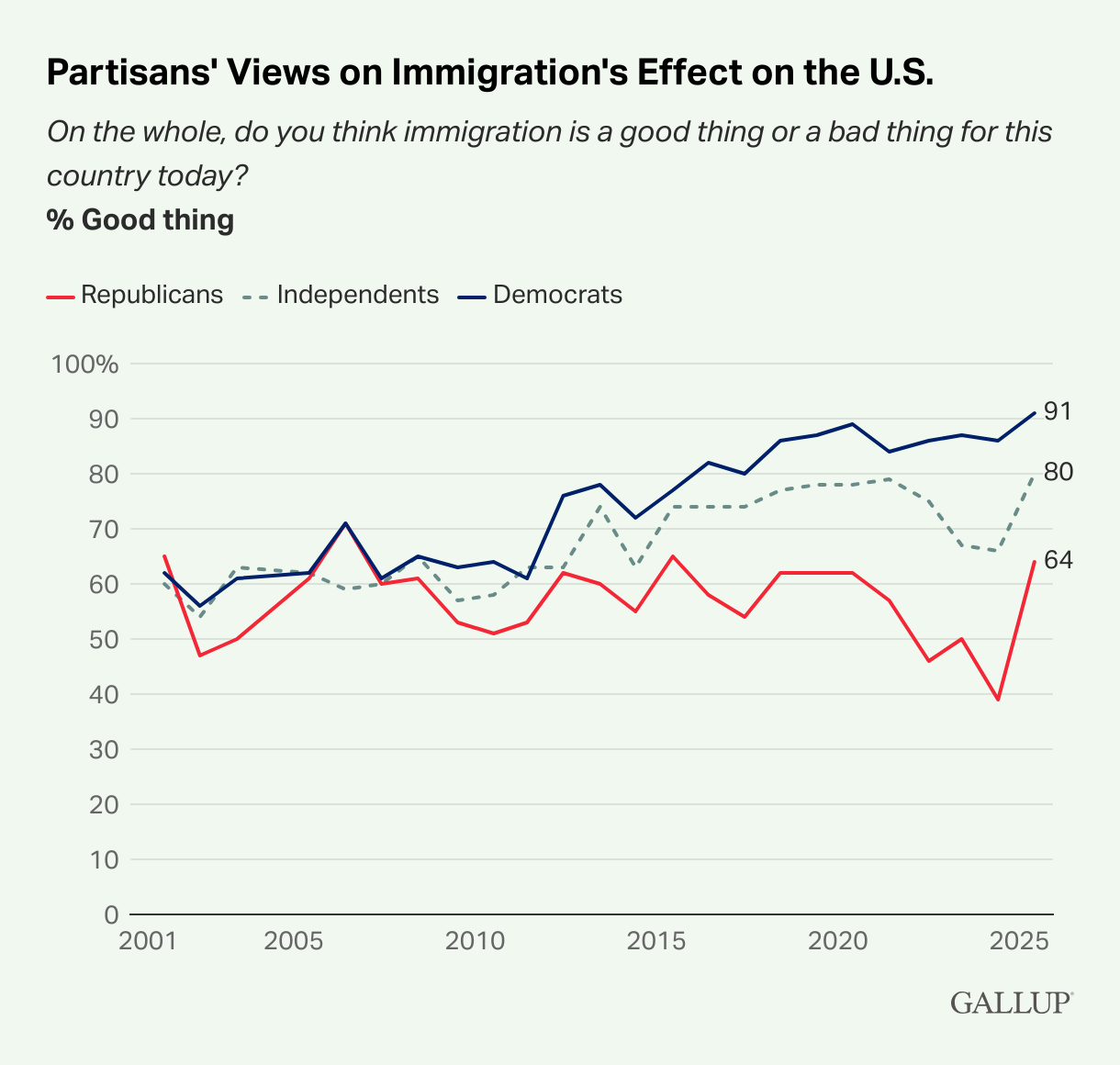
For good reason, Democrats and a growing number of Republicans strongly favor legal immigration. With a sharper focus on reality, this too can be a unifying issue rather than a divisive one.
Merit Realism: Reward Competence
For most of the 20th century, the left fought for a simple moral idea: equal opportunity. Fight discrimination, increase access, let people compete fairly, and reward merit.
Even though “merit” is something we can never perfectly define or test, Americans embraced this vision. They still do. Surveys show strong support for colorblind equality and merit-based opportunity.
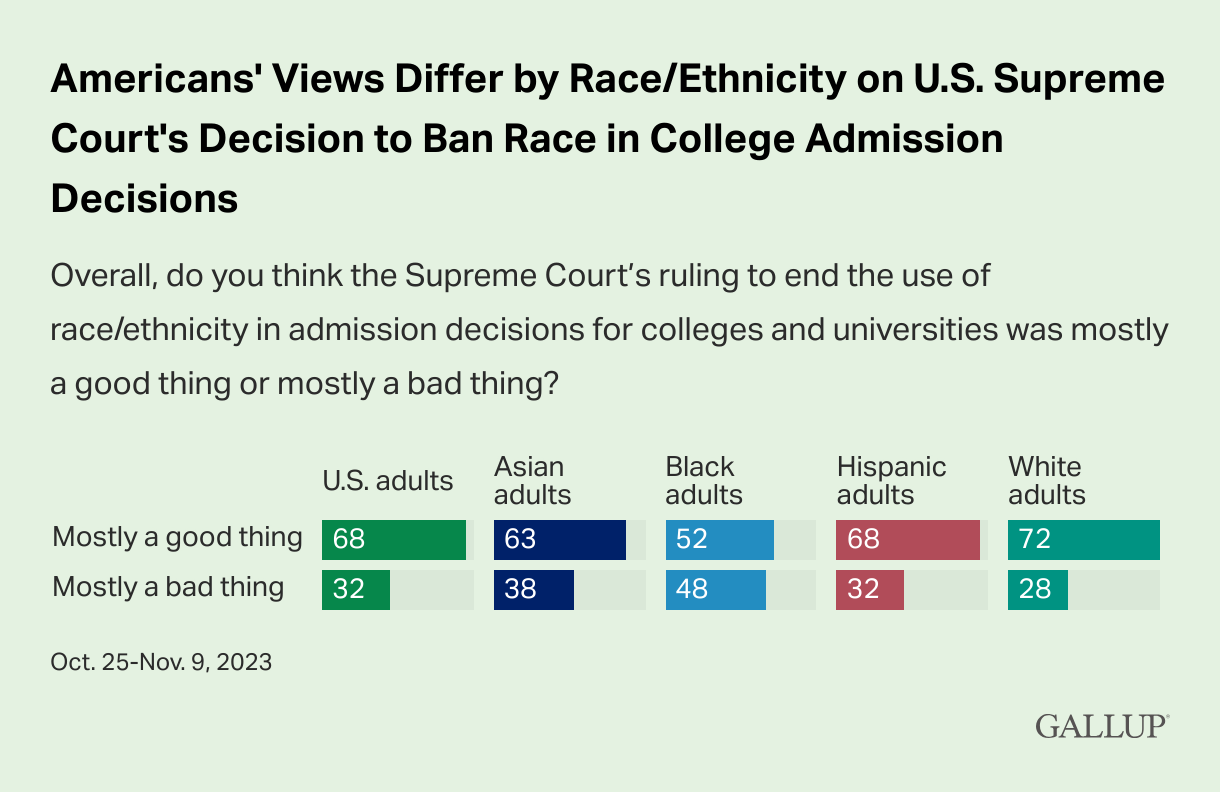
But when racial disparities persisted during the first quarter of this century, progressives shifted the goal. Instead of doubling down on opportunity, they pivoted toward outcome-based equity. Merit came to be seen not as a solution but as a problem—a mask for systemic injustice. This reversal has been disastrous.
Meritocracy is far from perfect, but at its best, it replaces status with skill and inheritance with achievement. It’s how societies discover, encourage, and reward talent and hard work. And it’s how ordinary people understand fairness.
Downgrading merit in favor of group-based allocation not only violates common sense, but it also alienates voters who believe—correctly—that competence matters. The left’s original project was to help people work hard and acquire competence, not to pretend that competence does not exist.
Sex and Gender Realism: Believe Your Eyes
Perhaps no issue has done more damage to the left’s credibility than gender ideology. What began as a civil-rights argument metastasized into a demand that biological sex be treated as irrelevant, mutable, or subordinate to identity. This has led to policies that defy everyday experience: a few athletes born male competing in women’s sports, medical transitions for minors, and enforced language norms.
Most voters don’t buy it. They see sex as real and binary. Most do not make the distinction between gender as a social construct and sex as a biological one. When Democrats insist on these and other distinctions popular in modern psychology or feminist studies classes, they enter “don’t believe your eyes” territory.
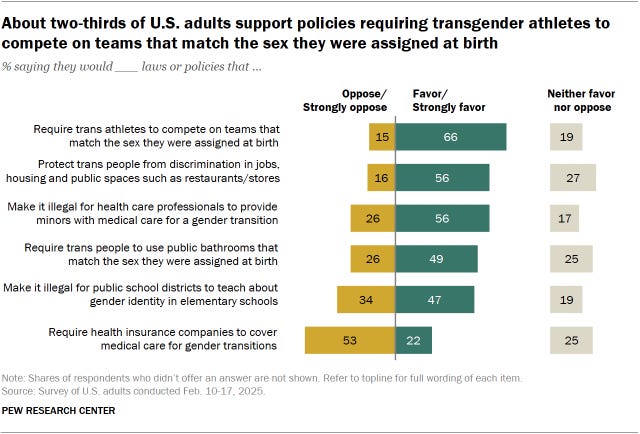
Democrats should strongly support rights and respect for trans people and oppose rhetoric that attempts to marginalize this or any group. But a party that refuses to acknowledge elementary biological distinctions will not be trusted on anything else. Democrats should listen to the thoughtful Congresswoman Sarah McBride from Delaware on this issue. She is the only transgender member of Congress.
McBride argues that transgender rights are inseparable from normal, bread-and-butter civil rights. She declares the obvious — that Republicans exploit trans issues as a deliberate distraction. She urges Democrats and LGBTQ advocates to defend trans people without letting the fight become a made-for-TV trap. In her public messaging, she embodies biological realism: emphasizing the need for “imperfect allies” and learning from the successful campaign for gay marriage by humanizing trans people rather than treating every disagreement as disqualifying.
Patriotic Realism: Fly the Flag!
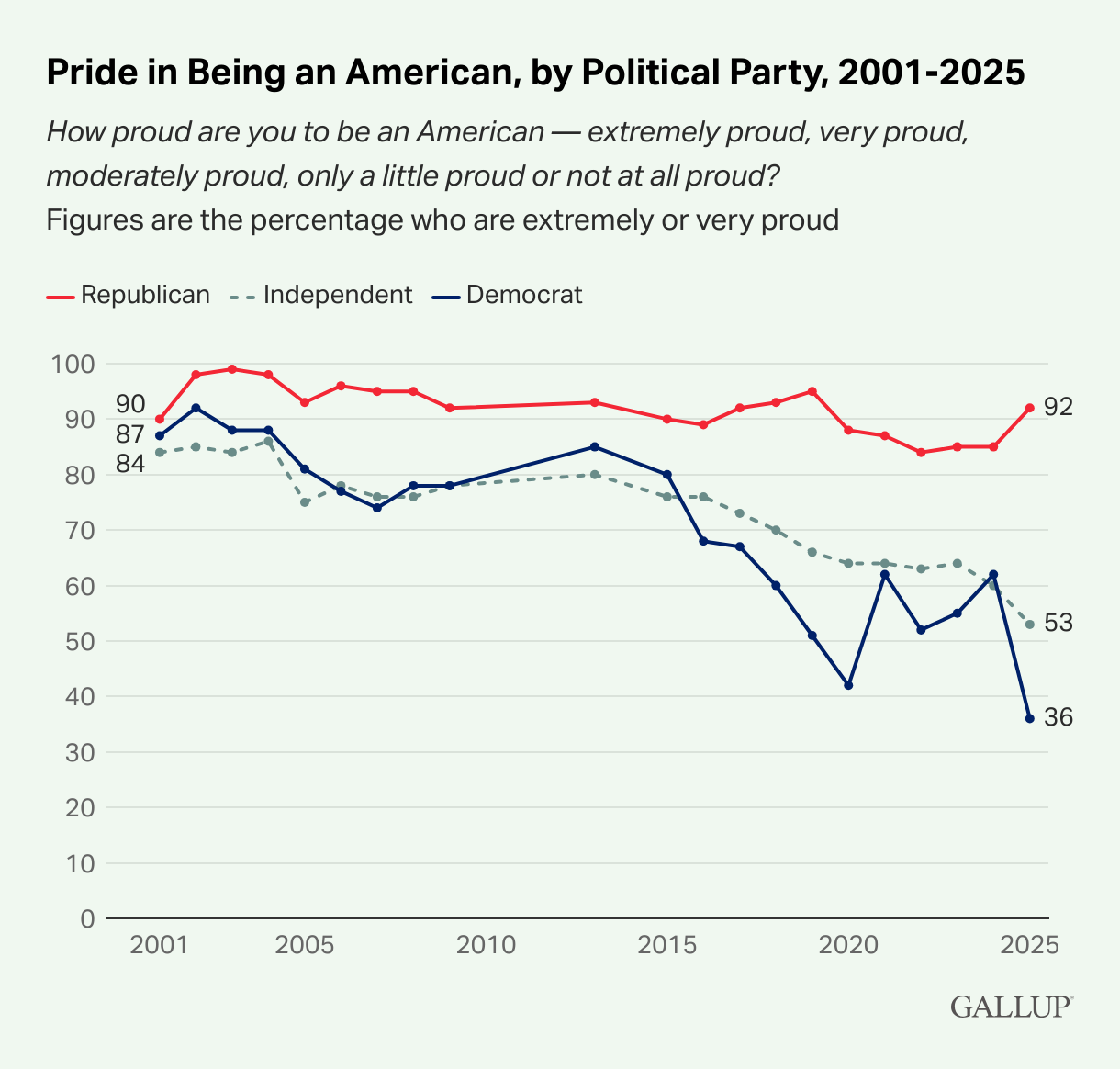
Although Americans love their imperfect country, over the last generation, the left has promoted a politics of national shame. They see America as fundamentally racist, oppressive, and corrupt. This language resonates with a small activist class—and repels almost everyone else.
Most Americans, including immigrants and minorities, love their country. They know it’s flawed. They also know it’s worth defending.
Patriotism isn’t reactionary. It’s a critical part of how large, diverse societies mobilize for big goals. Every successful reform movement in American history—from the abolition of slavery to the creation of labor and civil rights—has wrapped itself in the flag.
Leaders who scold their nation cannot lead it. A left that wants to build must relearn how to say that the United States is worth fixing because it is worth loving.
Democrats: Get Real
Drivers who follow their GPS off a cliff belatedly discover the crucial difference between a map and the actual terrain. Progressive ideals are a map: simple, directional, and legible. The actual terrain is muddy, jagged, occasionally steep, and utterly indifferent to the map.
For the first quarter of this century, progressives have confused the map of moral performance with the landscape of everyday American life. They followed the map, ignored the territory, and ended up at the bottom of a cliff.
After World War II, George Orwell noticed that political blindness need not always be imposed by tyrants – it can also be self-administered. He realized that the hardest truths are often not hidden; they are ignored. His solution was brutal honesty, intellectual humility, and continuous, critical vigilance. This led to his memorable line: “To see what is in front of one’s nose needs a constant struggle.”
The progressive recovery requires leaders who, like Orwell, ruthlessly face reality and embrace the messy terrain of American political life. These leaders should demand cheap energy, higher wages through higher economic growth, “Get it done” governance, smart and strict immigration, rewards based on merit, respect for basic biology, and a patriotic celebration of the United States.3
This is the foundation, not the edifice. Leaders need compelling stories, specific examples, and the ability to inspire people to work for big goals. But even and perhaps especially in these divided times, the party that articulates reality-based principles with energy and imagination can build an enduring political majority.
Musical Coda
For example, Teixeira co-authored a book arguing that long-term demographic changes conferred a sufficient partisan advantage to guarantee the Democratic Party's future success. In time, his views evolved from optimism about demographic destiny to a sharp critique of Democratic elites for losing the support of non-college voters across all racial groups. He began to doubt that demographics determined electoral outcomes and instead advocated a growth-oriented, patriotic Democratic politics.
Those Teixeira essays are great! The democrats need to adopt realistic policies about immigration, climate and civil rights and win back the working class, especially those without a college degree 📜
Marty -
Another brilliant piece of writing. If only the world were as rational as the arguments you present. Keep it up!