
I have a simple rule: people with no electoral experience should not run a democratic country. The rule isn’t absolute: two of the five US Presidents who had never held elected office did an excellent job (though both had won major wars).1 Moreover, if I had to violate my rule and pick someone with no electoral experience to lead a nation, I’d avoid bankers because they tend to focus narrowly on financial markets. I’d take a chance on an entrepreneur, a community leader, or a local deacon.
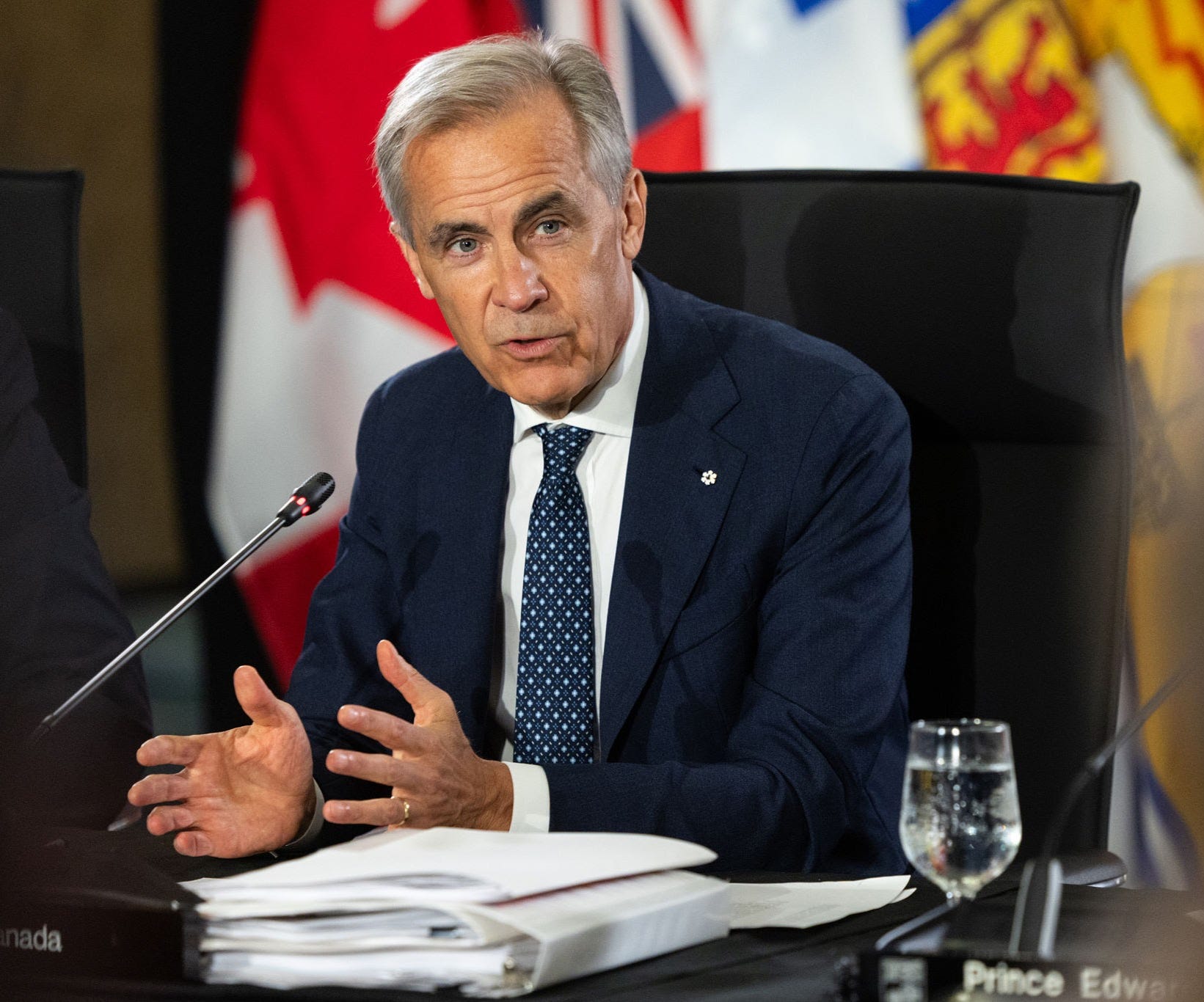
Canadian Prime Minister Mark Carney violates all of my rules. Unlike every head of state in Canadian history, he had never run for any office. He had never served in cabinet or as a Member of Parliament. When he entered the Liberal leadership race, he had no seat in the House of Commons, which is just plain weird in a parliamentary system. And as a former Goldman Sachs Managing Director and governor of both the Bank of Canada and the Bank of England, he is the consummate global banker.
Who is Mark Carney?
Carney was born in 1965 near the Arctic Circle, in Canada’s Northwest Territories. He grew up in Edmonton and attended Harvard on a scholarship, played ice hockey, and earned a BA in economics. He joined Goldman Sachs in 1988, took a 3-year leave in 1991 to earn a doctorate in economics at Oxford, and returned to work in Goldman offices in London, New York, and Toronto.
In 2003, Dr. Carney left Wall Street to join the Bank of Canada first as deputy governor. In 2008, Conservative prime minister Stephen Harper named Carney governor of the Bank of Canada, where he helped steer the country through the global financial crisis. He chaired the G20 Financial Stability Board, which put him at the center of international financial reform. In 2013, the British government named him governor of the Bank of England. Carney became the first non-Brit to hold the job in the bank’s three-century history, and he found himself navigating the Brexit upheaval.
Canada’s 2025 Election
In early 2025, Carney entered the race to lead the Liberal Party. First, he had to elbow his way past an obviously qualified woman. Chrystia Freeland had deep roots in the Liberal Party as Trudeau’s talented deputy prime minister and finance minister. Trudeau had positioned her to succeed him. But Trudeauisme had run its course, so Carney won the Liberal leadership nomination in a landslide, taking nearly 86% of the vote.
Getting the nomination was much easier than winning the election. By January 2025, Trudeau’s Liberals trailed the Conservatives by 20-25 points. Conservative Pierre Poilievre capitalized on Trudeau’s pretty-boy, nepo-baby unpopularity and ran on cost of living, crime, and housing. Every poll showed Poilievre as headed for a historic win.
Donald Trump rescued Mark Carney. Trump launched a trade war with Canada, imposing steep tariffs on Canadian imports and threatening a 25% tariff on Canadian-made cars. Then he kept announcing that Canada should become the 51st US state and threatened to use “economic force” to make it happen. Trump kept up his anti-Canadian shitposting until Canada’s election day, and he absolutely torpedoed the Conservatives.
Canadians rightly concluded that Trump was insulting their sovereignty. Carney adroitly surfed the resulting wave of patriotism. He ran an “elbows-up” ad with comedian Mike Myers that went viral globally and reshaped Carney’s image from a sober banker to a resolute Canadian patriot. Worth watching.
Conservative Pierre Poilievre’s “Trump light” populist style worked only as long as Trump remained a political abstraction. Once Trump threatened Canada, any resemblance to him immediately became a liability. Instead of a referendum on Trudeau, the election was suddenly about who could best confront a rogue US President. Voters concluded that a central banker who had steered economies through crises like Brexit was better suited than a Trump syncopant to lead a trade war with the US. Voters shunned Poilievre so hard that he lost his seat in Parliament.
Carney won 43.5% of the vote and 168 seats, just 4 short of the 172 seats needed for a parliamentary majority. Without seeming to care, Trump had destroyed yet another erstwhile ally. (One political scientist suggested that Trump had helped the Liberals so much that “they ought to pay him”).
Carney’s Davos Moment: At the Table, Not On the Menu
On January 20 of this year, Carney spoke at the Davos conclave of the world’s power brokers and thought leaders. Carney began his address in his serviceable, non-native French, asserting that the world is in “a rupture, not a transition.”
Carney declared that the US-anchored, rules-based order was gone. The great powers now used economic integration as a weapon. They imposed tariffs to gain leverage and exploited their control of global financial infrastructure to coerce weaker nations. They gleefully weaponized their supply chains for national gain.
Carney urged the world’s middle powers to act together, saying, “If we’re not at the table, we’re on the menu.” He argued that shared investment in resilience is cheaper than each nation building its own fortress, and that middle powers should build “variable geometry” coalitions that could shift with shared interests. Attendees gave his remarks a standing ovation. The following day, Trump used his time at Davos to demand that the world show more gratitude for US military protection. Once again, Trump magnified Carney’s popularity.
“Today I will talk about a rupture in the world order, the end of a pleasant fiction and the beginning of a harsh reality… On the other hand, I would like to tell you that the other countries, especially intermediate powers like Canada, are not powerless. They have the capacity to build a new order that encompasses our values, such as respect for human rights, sustainable development, solidarity, sovereignty and territorial integrity of the various states.”
Mark Carney, Davos, 2026
Since Davos, Carney has produced a preliminary but landmark agreement with China, a multi-billion-dollar deal with India, and addressed parliaments in Australia and Japan. He signed trade and security deals with the UAE and Ecuador. His efforts to deepen Canadian-EU ties have led to (probably unrealistic) talk of Canada as an “associate member” of the EU.
Last month, Carney, the presidents of Brazil and Kenya, and the European Council president announced Partners for Multilateralism (P4M), which aims to link middle powers and developing countries on international law reform, security, supply chains, climate and AI. Although details are thin, Mexico’s President Claudia Sheinbaum called his analysis “in tune with the current times,” and Australia’s Anthony Albanese said it matched Australia’s view.
A Liberalism With More Spine Than Spin
Let’s pull back and grant two counterclaims to this narrative. First, without Donald Trump’s ham-fisted intervention, Mark Carney could well have joined Justin Trudeau and a long list of poll-tested liberals who lose elections to national populists.2 But Carney broke the pattern by arguing for liberalism on moral grounds, not just technocratic ones. He has repeatedly told voters that a strong economy is necessary not simply for prosperity, but as a prerequisite of a just society. He defends, in moral terms, Canadians’ freedom to follow their own religious and ethical lights. At a time when most liberals reach for spreadsheets, Carney reminds the world of first principles.
Second, Carney is in an unfair fight. Canada is one-tenth America’s size. Seventy percent of Canadian exports go to the US, but only 12-15% of US exports go to Canada. As a result, Canada’s core economic infrastructure (especially its massive oil and gas pipelines and rail networks) runs north-south, so Canada cannot easily redirect its primary exports to other global markets. Finally, as Carney knows well, the Bank of Canada is heavily constrained by the US Federal Reserve. When rates diverge too far, Canada pays for it in the exchange rate and in capital flows (although, to be clear, the BoC is independent and has gone its own way many times, including this week).
Nonetheless, Carney is reshaping 21st-century liberalism. Third-way and abundance liberals embrace slashing regulations to promote growth. Some would cut taxes to fight inflation. Carney has done both while preserving Canada’s welfare programs. He suffers neither weakness nor wokeness – talking about gender far less than Trudeau did and rejecting conventional liberal group-think. He slashed immigration and wound back criminal justice reforms that had softened law enforcement.
Carney has broken with liberal orthodoxy so often that populists struggle to caricature him. With approval ratings over 70%, he is the most popular Prime Minister in Canadian history. This lets him do what leaders of other mid-sized democracies, like Macron in France, Burnham in the UK, and Merz in Germany, cannot: commit his nation, knowing that his people will follow.
At Davos, Carney challenged Thucydides’ famous observation that “the strong do what they can and the weak suffer what they must”, arguing that the rules of the liberal order never bound the great powers.3 As an ex-banker, Carney understood that this order rests on a dense web of trade, investment, and cultural ties that can be mobilized to counter global hegemons. He is very clear that Canada seeks resilience to prevent anybody from controlling its markets or threatening its sovereignty, territorial integrity, democracy, or rule of law. In his telling, international cooperation is not a code for great-power domination. It lets different nations that share fundamental values pursue their own preferences.
Moral Leadership
Along with Pope Leo, Carney is emerging as one of the free world's moral leaders. The two men share more than a faith. Carney is a practicing Catholic who knelt for the Eucharist at Leo’s inaugural Mass in May 2025, then met the new pope in the basilica with his wife and daughter. This past May, the two spoke by phone after the publication of Leo’s encyclical, Magnifica humanitas, on the encyclical’s themes and on peace in the Middle East and Ukraine. Leo has offered to host peace talks between Russia and Ukraine at the Vatican. Carney has spent the year trying to build a coalition of middle powers that say no to bullies.
At Davos, Carney told a story about a greengrocer from Václav Havel’s 1978 essay “The Power of the Powerless.” The grocer put a sign in his window saying “Workers of the world, unite!” He did not believe the slogan, nor does anyone who walks past it believe it. But like all grocers, he hung the sign each morning because, as Havel tells it, “one must do these things to get along in life”. The sign is a ritual that signals compliance.
Carney argued that systems built on pretense like this hold together only as long as people play along. The day even a single greengrocer removes his sign, the illusion starts to crack. Carney urged companies and countries to “take down their signs” and “live the truth” by recognizing that America was abandoning the security order they all relied on.
Pope Leo and Mark Carney both know the power of moral authority. They know the story of French foreign minister Pierre Laval, who in 1935 urged Joseph Stalin to ease up on his suppression of Catholics. Like Trump trying to humiliate Ukrainian President Volodymyr Zelensky, Stalin responded, “How many divisions does the Pope have?”
Joseph Stalin did not live to see John Paul II elected pope and return to his native Poland, where millions gathered to hear his message. Stalin never saw Solidarity rise from the shipyards of Gdansk the following year, or the Berlin Wall fall a decade later. Pope John Paul II and Solidarity helped bring down communist rule in Eastern Europe without commanding a single division. They commanded conviction, and the confidence it gave millions of ordinary people to stop obeying.
As two emerging leaders of the free world, Mark Carney and Pope Leo are making a similar bet. Divisions can win military battles, but moral authority decides whether the greengrocer puts up his sign. Tyrants who mock moral authority often end up buried by it.
ICYMI
Why the Chinese stock market has fallen 20% this year.
Flávio Bolsonaro flees to Miami after losing Brazil's election.
AI-generated music is changing our musical tastes.
Data center restrictions are on 49 ballots in 13 states this year.
The world’s chips are vulnerable not only in Taiwan, but also South Korea.
The three presidents with no prior electoral experience who were deeply unimpressive were Zachary Taylor, “old Rough and Ready”, who survived the War of 1812, the Black Hawk War, the Seminole Wars, and the Mexican–American War only to die in office; Herbert Hoover, a skilled administrator and technocrat who signed the Smoot-Hawley Tariff, then froze like Bambi during the Great Depression; and Donald Trump, whom historians will almost surely rank as a profoundly failed president.
But having won the Civil War, Ulysses S. Grant protected Black Civil Rights, dismantled the KKK, and created the Justice Department. After winning World War II, Dwight D. Eisenhower became the gold standard for non-politicians in the Oval Office. He ended the Korean War, deftly managed the Cold War, built the Interstate Highway System, launched NASA, and used federal troops to desegregate Little Rock.
Oddly, Trump is continuing his campaign to make Carney more popular by recently endorsing Canadian separatists.
Or as Trump’s Deputy Chief of Staff Stephen Miller told CNN’s Jake Tapper, “We live in the real world, Jake, that is governed by strength, that is governed by force, that is governed by power. These are the iron laws of the world since the beginning of time.”