
I have come to China on and off for five decades and it never ceases to surprise me. I spent the past week in Southern China. Here are some notes.
Economic Growth
Rapid economic growth is a miracle, especially in a desperately poor country. Growth does not address every social problem and it always creates a few — but it solves the important ones and gives a country a shot at figuring out the others. Nothing else does this.
The China I saw in 1974 was a miserable place. 90% of China lived in grinding poverty under a political system that had become psychotic during Mao’s Cultural Revolution. They aspired to someday own a bicycle, a radio, and a crappy refrigerator.
With the death of Mao in 1976, China began its historic transformation. They moved from collective farming to the Household Responsibility System, which allowed farmers to sell surplus crops for profit. They created state investment planning and state-controlled banks and capital markets to finance rapid, long-term growth. This produced the usual politicized investment decisions that lead to housing crashes and massive overproduction in some sectors, including EVs. But in China’s case, it also produced astonishing economic growth.
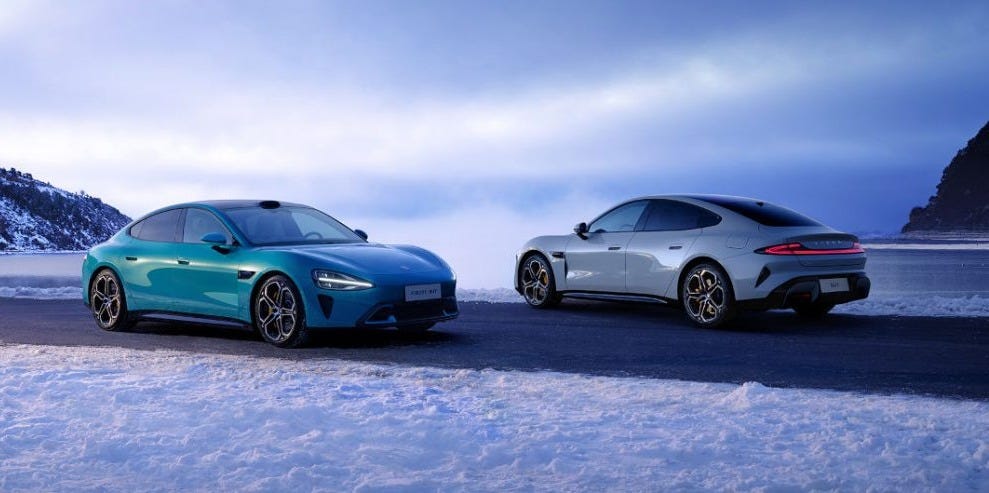
China tested markets and entrepreneurship by establishing four Special Economic Zones in 1980. Three of these laboratories of capitalism thrived, but the one outside of Guangzhou absolutely exploded. A fishing village called Shenzhen grew from 30,000 people to a global tech hub of over 17 million today. It’s a city with self-driving cars, drone delivery, and the largest network of electronics suppliers on the planet. Standing in a gleaming showroom for Xiaomi cars, I realized that Shenzhen helps China build some of the best cars in the world. For anyone who saw Canton in 1974, it’s gobsmacking.
As labor costs rose, China pivoted from cheap manufacturing to high-end technology and massive infrastructure projects. When I visited in 2008, China had not a single high-speed train. Today it has more than the rest of the world combined. In 2008, nobody used credit cards — and they still don’t. As the West moved from cash to credit cards, China leapfrogged directly to mobile payments, creating a cashless society in less than a decade. When my wife pulled out some cash at a student cafeteria (where a camera had scanned the various dishes on our trays and instantly computed the charge), the cashier laughed. She had no cash register.
China today is navigating a classic middle income trap. The population is aging, so the college campus hosting us has trouble recruiting enough students. A heavy reliance on commercial and residential construction has led developers and local governments to overbuild. They have loans they cannot repay, but state-owned banks are reluctant to acknowledge this. Rapid industrialization made China the world’s largest carbon emitter — and the world’s largest investor in green energy. Chinese income inequality is now comparable to the US.
China today faces high-class problems compared to the ones it faced in the 1970s. To see a country that has lifted over 800 million people out of poverty is to witness an achievement unparalleled in modern history. To see it build beautiful cities with extensive lakes, parks, and greenways simply takes your breath away (even if some of the gleaming skyscrapers are half empty). To hear citizens of Shenzhen brag that their city measures the time it takes to repair a reported cracked sidewalk tile not in weeks or days, but in hours, makes me jealous. It gives new meaning to “state capacity”.
Surveillance
The Chinese government knows where you are at all times. Generally, they don’t care much — but they can find you quickly if they wish to. Historically, this meant plain clothes cops who watched over tourists and made little effort to disguise themselves.
Now uniformed cops are still abundant, but they have technology helpers. Outdoor video cameras are everywhere. Even on a wooded path on a remote college campus, there is an eye in the sky. The cameras are backed by an extensive system of facial recognition that worked even during Covid when faces were masked. On top of that, every cell phone and every car is registered, tracked, and tied to your national identity. You board trains using your national ID card — or passport if you are foreign. Misbehave, and your inability to board trains is the least of your worries.
Managing hundreds of millions of cameras requires a sophisticated, multi-layered architecture to handle the sheer volume of data. It requires advanced facial recognition, and AI software to interpret it. This in turn requires staggeringly large computing clusters and a “National Team” of AI companies to develop standardized protocols so that a camera in Zhuhai can talk to a database in Beijing. This national Panopticon was built by a government that keeps an very watchful eye on its citizens.
The system may be the result of a low-trust regime, but the paradoxical result may be that citizens trust each other more. There is no fear of crime. On a campus, students leave bags with MacBooks exposed unattended on benches. Women walk alone in the dark. When I ask people about whether they find the cameras intrusive, the answer has twice started with “we have a different view of this. In our experience, everyone behaves better when they are on camera”.
Personally, the system gives me the creeps — but the benefits are hard to dismiss.
Future Cars
China today is consolidating car companies the way the the United States did in 1921. At the time, we had 88 car companies and thousands of suppliers. Long before Silicon Valley, the San Francisco Bay Area was considered “the Detroit of the West”. Durant Motors of Oakland, and San Francisco’s California Automobile Company, are long gone. As is Kleiber Motor Company, which built passenger cars at 10th and Folsom in San Francisco. Or Emeryville-based Doble Steam Car Motors. Or luxury carmaker Fageol from Oakland.
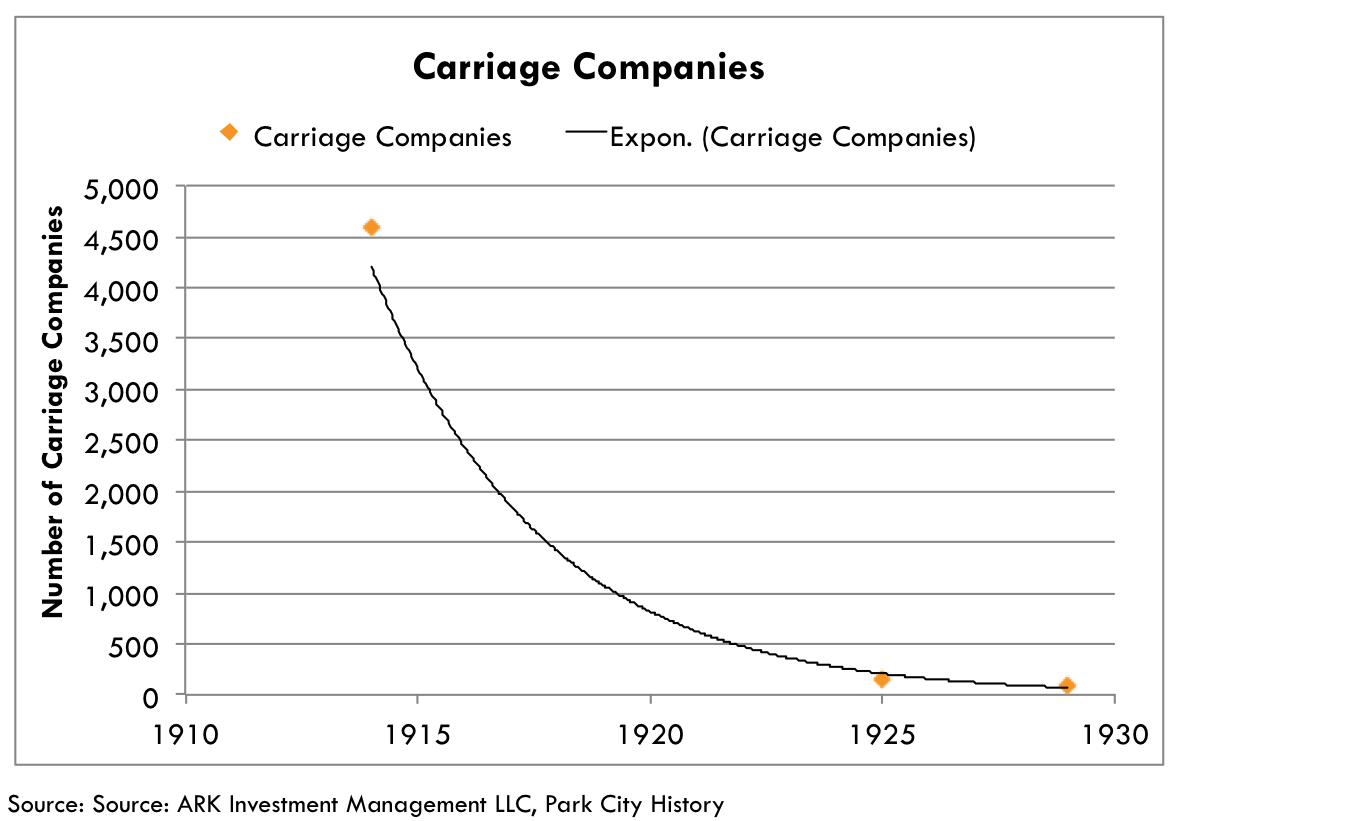
It took two decades for the US car industry to consolidate down to the Big Three (GM, Ford, and Chrysler). Like everything else, it’s happening faster in China. China ended up with too many car companies thanks to a massive influx of government-subsidized electric vehicle (EV) startups. About 500 companies in 2019 have combined down to about 100 today.
More consolidation is coming. Analysts predict the great automotive company die-off will end with perhaps 8–12 major players by 2028. The top three companies already control nearly 47% of the market.
The consolidation is political as well as economic because China has built “Local Champions”. These are State-Owned Enterprises (SEOs) backed by provincial or municipal governments. EV SEOs benefit from local tax breaks, land grants, and government procurement. It feels like soccer teams: Shanghai has SAIC, Guangzhou has GAC, and Beijing has BAIC. They should issue jerseys.
Increasingly, you see two kinds of automobiles in China: future cars and past ones. Past cars are either obscure brands — the Durant Motors of China — or they have combustion engines and sport blue license plates. Many of them are familiar Japanese nameplates. Japan looks to have missed the transition to EVs and seems likely to die off here along with the dozens of oddball EV brands.
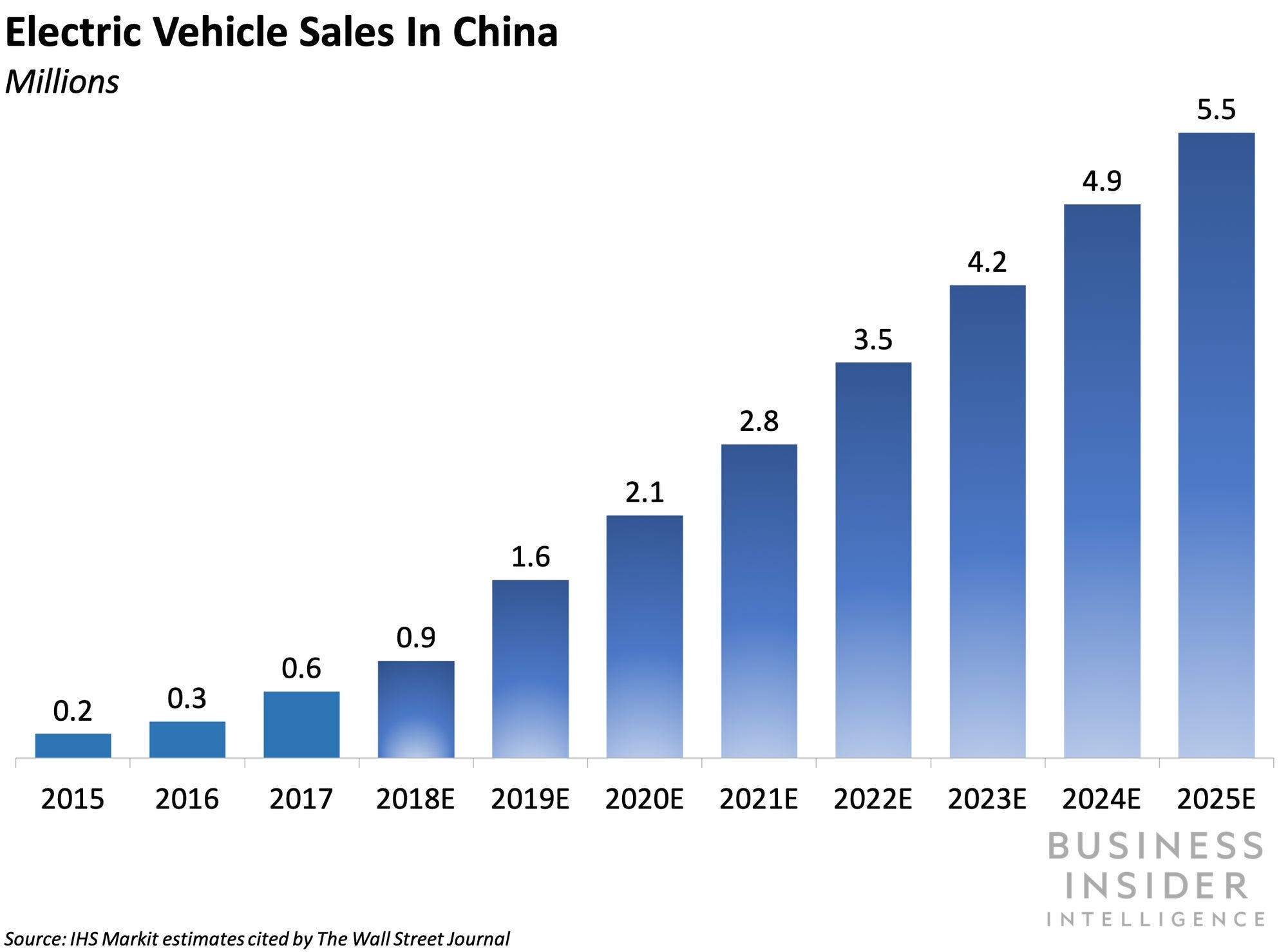
Future cars are easy to spot. They are EVs with green license plates and recognizable brands. This includes all taxis. Future cars include:
Tesla. The Model Y and Model 3 are made in Shanghai and are popular here. There are as many Teslas in the Bay Area of South China as in the California Bay Area, but nobody worries about Elon’s politics.
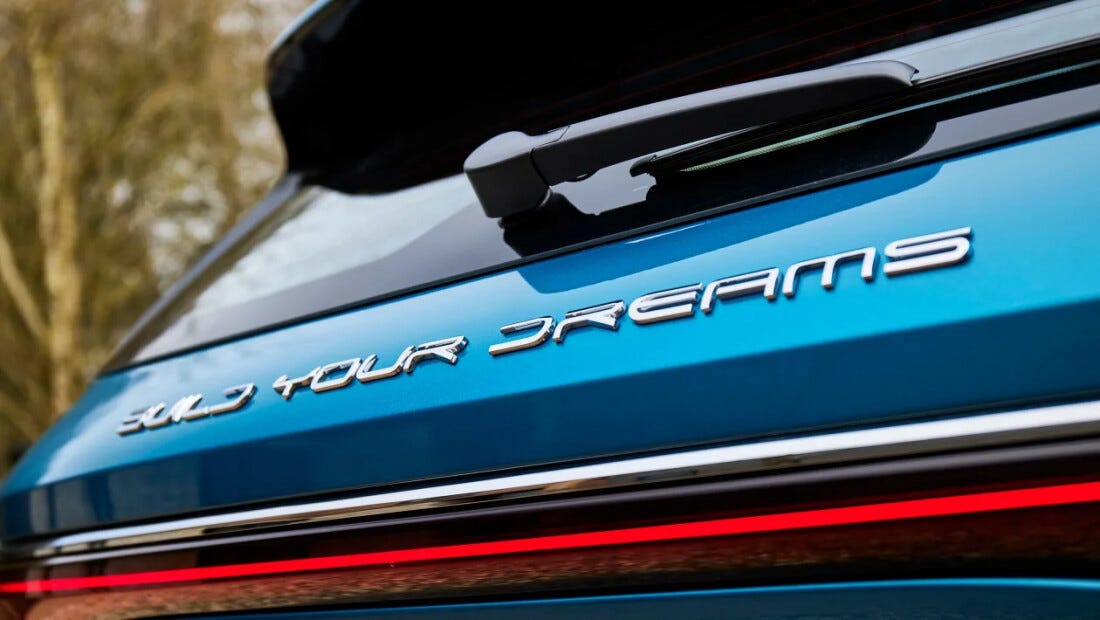
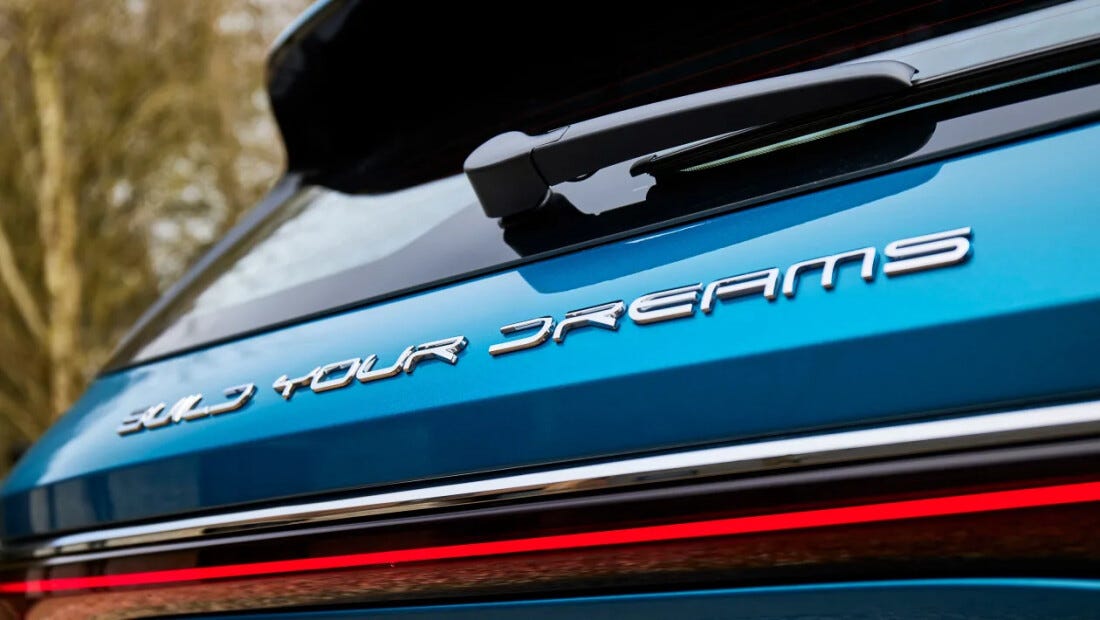
BYD, the EV giant whose cars are aggressively priced and high-quality. I’m still not sure why putting “Build Your Dreams” in English helps sell cars in China, but it seems to work.1
SEOs like SAIC (which has powerful joint ventures with VW and GM), and Changan Automotive.
Geely (which owns Volvo, Polestar, and Lotus. So yes, you can buy a Chinese EV in the US).
Luxury carmakers. Xiaomi, which began as a cell-phone maker, but now sells kitchen appliances, home tech, and killer cars. See a great MKBHD review of the Xiaomi SU7 here.
Tech-forward brands. I am not sure whether brands that focus heavily on software, user experience, and cutting-edge features will survive, since these advances are quickly copied by larger companies. (You want in-car karaoke? The one I tried failed to improve my singing.) These include Li Auto (maker of high end SUVs), NIO Auto (the “Tesla of China” famous for its battery-swapping stations), and XiaoPeng, which positions itself as the leader in autonomous driving and smart cockpit technology.
The Last Grownup
It’s odd to be an American in China as our mad king president beclowns himself before the world. In just four weeks, Trump has provoked the largest energy disruption in history, enriched Russia, threatened to starve poor countries, and further squandered American resources and reputation. He has handed China an extraordinary opportunity to enhance its global reputation — although they may not have the confidence to take advantage of it.
Many world leaders now regard China as the last grown-up in the room. While Beijing faces significant economic risks due to its energy dependence, but the long-term geopolitical benefits that the crisis offers China may outweigh the short-term costs for several reasons:
The US is now fully distracted. American military, financial, and political capital is rapidly dwindling away from the Pacific theater. A war in the Middle East forces the U.S. to redeploy carrier strike groups, high-end interceptors, and precision munitions that were intended to deter China in the South China Sea or Taiwan Strait. Beijing may perceive a “window of opportunity” where the U.S. lacks the domestic will or military bandwidth to protect Taiwan.
China has a learning opportunity. China is using the conflict as a live laboratory to study American military capabilities. By observing U.S. and Israeli strikes, Chinese intelligence can analyze the performance of U.S. Aegis and Patriot missile defenses and electronic warfare tactics.
The war may accelerate China’s energy independence. China is the world’s largest oil importer and has also prepared massive reserves. While the war causes some immediate pain, it may also serve as a catalyst for China’s long-term goals. The volatility of the Strait of Hormuz will likely accelerate China’s transition to renewables and its push for land-based energy pipelines from Russia and Central Asia. China may use the crisis to push for oil trades to be settled in Yuan, further challenging the dominance of the U.S. dollar in global energy markets.
China can seize the diplomatic and moral high ground. Beijing positioned itself as a neutral mediator in the 2023 Saudi-Iran deal, while portraying the U.S. as an agent of chaos. This resonates with many “Global South” nations who are wary of Trump and U.S. military intervention. If the U.S. focuses solely on military action, China can deepen its economic and diplomatic ties with other Gulf states like Saudi Arabia and the UAE. They can offer to invest in infrastructure without the baggage of a military alliance. They can offer to backstop poor countries facing issues financing energy that is suddenly much more expensive. China’s trade surplus gives it a pile of dollars to lend.
Writing in the Financial Times, Adam Tooze suggests that China could build alliances by sharing its privileged status in the Strait of Hormuz. He notes that “It is not by accident that tankers are rumoured to have been rebadging themselves as Chinese.” He suggests that Beijing could also offer to contribute to a global oil reserve or join with other countries to create a global push for alternative energy.
China might even emerge as a peace broker, potentially wielding not only global credibility, but serious power if they decide to pressure combatants to reconcile by curtailing access to rare earths or other critical war materials .
Will China rise to the moment? It’s in a tough spot because it imports nearly half of its oil through the Strait of Hormuz. If Hormuz remains blocked, China’s manufacturing sector and domestic finances would be at risk. A global recession triggered by $150+ oil prices would devastate China’s export-heavy economy.
But China really is the last adult standing. Even though I regard it as our geopolitical rival, I would love to see it shed its traditional defensiveness and paranoia and assume its rightful place on the world stage.
BYD has figured out that an English slogan does not help car sales in Europe, so it will remove it in the EU.
Every member of Congress should be required to make a trip to China. Standing on the Bund and looking across the river in Shanghai, after taking the train or freeway into the city from the airport, will instantly change one's understanding of global politics. Houston and Los Angeles seem almost backward in comparison. This lack of direct exposure severely hinders an informed perspective (and an important intuitive sense) on how global events will unfold. Your trip and your notes are a testament.