
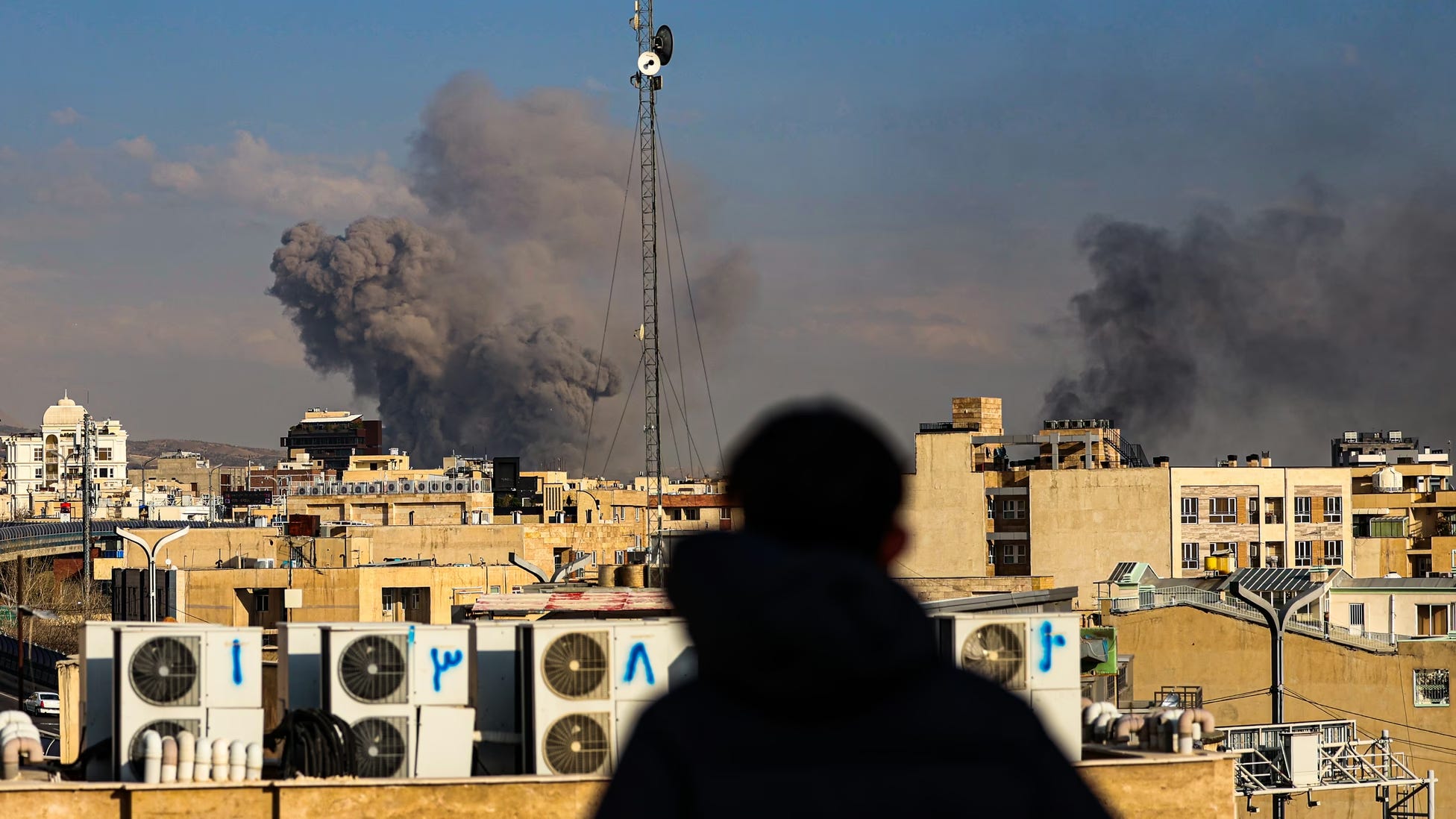
After taking a few days to reflect on their pulverizing midterms, Trump and his prince have concluded they made only one big mistake. JD Vance and his boss both believe that voters spanked them brutally because of their ill-advised adventure in Iran and the spike in gas and diesel prices that followed. In their view, frivolous, trust-crushing trade wars against allies played little role in rising costs. Vance has never shown any discomfort with Trump’s extravagant personal corruption, his vanity construction projects, or his full-throated support for AI and data centers.
US presidents who lose legislative control after their midterms often turn to foreign policy. This is not an iron law of history, but it makes sense, since Congress has less control over matters of state. Classically, Reagan convinced the Senate to ratify the INF missile treaty after he lost his majority in 1986. Clinton passed the Dayton Accords ending the war in Bosnia after losing both chambers in 1994. Obama passed the Iran nuclear agreement and the Paris climate accord after losing the Senate in 2014. Trump passed the Abraham Accord after he lost the House in 2018.
So we can reasonably expect Trump’s first foreign policy priority will be to end his misbegotten war in Iran. His escalation threats are radically diminished. He and Vance need a deal that they can spin as a victory, whether or not it achieves America’s three stated objectives: that Iran must never have a nuclear weapon, it must not be allowed to enrich uranium, and the US must recover the highly enriched uranium that Iran has already produced.
For purposes of evaluating a settlement, let’s pretend that stopping nukes, not regime change, was the sole US/Israel goal in this conflict. Let’s set aside how severely the war has weakened the US and Israel diplomatically, exhausted us militarily, and revealed to the world profound gaps in our warfighting technologies. What standard should a Democratic Congress use in evaluating Trump’s proposed settlement with Iran?
The Senate should insist that any agreement to end hostilities with Iran be no worse than the agreement that Trump renounced during his first term. Recall that on July 14, 2015, Iran signed a deal with China, France, Germany, Russia, the UK, and the US. The Obama administration agreement (the “Joint Comprehensive Plan of Action”, or JCPOA) had five elements.
Limits on enrichment and stockpiling of nuclear material. Iran agreed to limits on the number of centrifuges it operated, how advanced they were, where they operated, and how much enriched material they could produce.
No plutonium. Iran removed and destroyed the core of its Arak reactor, blocking its ability to produce weapons-grade plutonium. They agreed that any new reactors would use a light water design, which is more proliferation-resistant.
Inspections. The International Atomic Energy Agency (IAEA) could continuously monitor Iran’s key uranium mines and mills for 25 years and its centrifuge operations for 20 years.
Sanctions relief. The US and Europeans lifted nuclear-related sanctions only after the IAEA verified that Iran had completed key steps. Iran completed this by January 16, 2016, the day the agreement took full effect. Iran had to comply fully before relief took effect. The JCPOA gave Iran about $100 billion in restricted oil revenues, and $400 million in cash, as part of the deal. UN, EU, and nuclear-related US sanctions were relieved, but US sanctions on missiles, terrorism and human rights stayed in place.
Snapback. If Iran cheated, any participant in the deal could immediately restore sanctions that could only be relieved with the unanimous consent of the UN Security Council.
Achieving the JCPOA took 19 months of negotiations, many of them conducted in secret. Few deals are perfect, and this one had some features that critics jumped on. It had sunset provisions that ended in ten to fifteen years. It allowed Iran to keep learning and improving its enrichment technology. Its military site inspections were limited and likely allowed undeclared sites to emerge. The Senate never agreed to ratify the deal, which would have made it far more binding. Instead, Obama implemented it through executive orders.
Trump rescinded the JCPOA in 2018 and reimposed sanctions, allowing Iran to breach its commitments starting in 2019. Today, Trump believes that after eight months of war he can negotiate a better deal than the JCPOA and that he can do it before Democrats are sworn in this January (the comparison is not perfect. A peacetime arms control agreement is not the same as an armistice to end an active war. On the other hand, Trump unilaterally tore up the JCPOA and, with Israel, decided to start a hot war).
Trump and Vance now find themselves negotiating from a much weaker position. To start, although Iran is collapsing economically, it feels that the midterms have put time on its side. They know Trump has been neutered politically, and they strongly suspect that Defense Secretary Pete Hegseth is doomed.1 They know that a Democratic Congress arrives in January, so Trump has less room to keep fighting. And obviously, Iran has a card it did not have in 2015: control of the Strait of Hormuz. Time really is on Iran’s side.
Could the US win a war with Iran? Sure, but at what cost? And why? Trump has never given a good answer because without a clear statement of our national interest, nobody can determine what we are willing to give up.
Absent clearly articulated goals, Vance was willing to give up a lot. This summer, he negotiated a memorandum to end the war that collapsed ten days after Trump signed it. The memorandum was not a final agreement, but it revealed that Trump and Vance were willing to do a deal vastly weaker than Obama’s JCPOA.
They were willing to offer Iran sanctions relief before verifying compliance.
They offered Iran a $300 billion reconstruction fund. Vance did not explain where the money would come from, but it would be a tough sell to US taxpayers who are sick of the US providing Israel with $3.8 billion of military aid each year.
The memorandum also removed limits on the quantity or purity of uranium Iran can enrich, or where it can enrich it. It did contain language banning Iran from developing nuclear weapons and provided for IAEA supervision, but it never addressed Iran’s stockpile of around 400kg of highly enriched uranium. This is the biggest single issue of the war, and the memorandum punted on it.
Senate Democrats should use the JCPOA as a framework for evaluating Trump’s agreement to end hostilities with Iran. Does it put America First and prevent Iran from building nuclear weapons? The Senate should insist that Trump negotiate a better deal than the one he tore up.
Trump will soon realize that getting a replacement for Hegseth confirmed by the Senate will be much harder after January 3, 2028. This will increase pressure on him to move quickly if he believes that inquiries into Hegseth’s leadership will weaken Trump further. Assistant SecDef Stephen Feinberg would take over once Hegseth steps down. Because the Senate confirmed him in his current role, he can run the Defense Department for 210 days. Moreover, the 210-day clock stops if the Senate is considering another nominee. Once Trump understands this, Hegseth is in even deeper trouble because, unlike his boss, Feinberg is a plausible, if very conservative, leader of an exceptionally complex organization.