
This is the first of two posts on wealth taxes. This note looks at what successful wealth taxes have in common and why the proposed California Billionaire Tax will fail in entirely predictable ways. Part II will argue for an entirely different approach to taxing wealth.
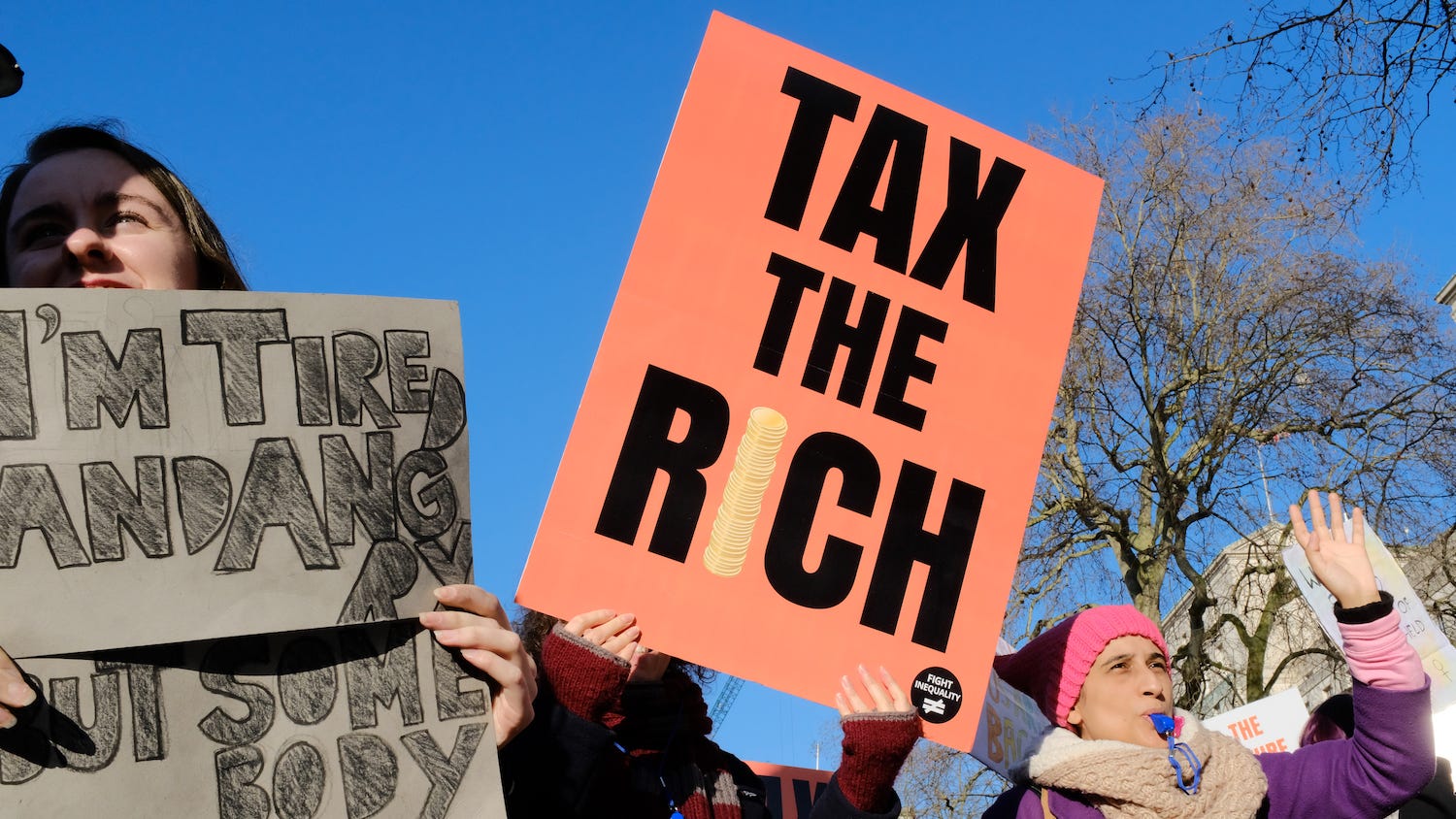
“Don’t tax you, Don’t tax me, Tax that fellow behind the tree.”-- Senator Russell B. Long, Chair of the Senate Finance Committee, 1973
Those concerned about income inequality in the United States often overlook how much starker the concentration of wealth has become. The richest 1% of American households now hold roughly $55 trillion — about as much as the bottom 90% combined. Not since the Gilded Age has so much been held by so few.
California is the headquarters for billionaires. By one count, we have 199 billionaires, compared to New York’s 135. The San Francisco Bay Area hosts 82 billionaires, compared with New York City’s 66. This level of concentrated wealth brings with it a long list of social pathologies, so it is not surprising that Californians are contemplating a special tax on billionaires.
The logic for this initiative is pure Willie Sutton. The famous thief explained that he robbed banks because “that’s where the money is.” On the other hand, we might want to think twice before building our tax policy on a guy who spent half his adult life in prison.
Although some progressives find wealth taxes emotionally gratifying, their actual track record is mixed at best. Most schemes fail to raise money, and many fail to tax wealth. On the other hand, a handful of wealth taxes work consistently well. Those who want to tax holdings rather than earnings need to examine the subject seriously to understand why the California ballot initiative fails almost every lesson on how to tax wealth effectively.
Let’s start with hard-earned lessons from failed wealth taxes.
Why Wealth Taxes Fail
A wealth tax is a tax on the returns to savings. If poorly designed, the tax can be extraordinarily high — especially when interest rates are low. A 2% wealth tax when real returns are 3% consumes two-thirds of the return. Critics argue this distorts the incentive to save and invest, reducing capital formation over time.
The practical problems are even more serious.
Valuation. Wealth taxes require the assessment of assets that lack liquid market prices, such as private businesses, art, real estate, intellectual property, and complex financial instruments. This is administratively expensive, generates endless disputes, and creates ripe opportunities for manipulation.
Liquidity. People who are “asset rich but cash poor” are forced to sell stakes in businesses or farms to pay a tax on unrealized value. This dynamic famously led Californians to revolt against their main wealth tax — the property tax — when we passed Proposition 13 in 1978 with 65% of the vote. Prop 13 slashed property tax rates and capped annual tax increases. Nearly half a century later, that revolt still shapes California’s fiscal architecture.
Capital flight. Wealthy individuals are mobile, and so is their money. When France operated its impôt de solidarité sur la fortune, an estimated 10,000–12,000 wealthy households left the country. Research indicates that revenue lost through emigration and avoidance more than offset the tax collected. Sweden, the Netherlands, Austria, Denmark, Germany, Finland, Iceland, and Luxembourg all experimented with wealth taxes. Most repealed them between the 1990s and 2010s. By the time France scrapped its wealth tax in 2017, only a handful of OECD countries still had one. The recurring pattern was the same everywhere: high administrative costs, aggressive avoidance through trusts and corporate structures, creative asset reclassification, capital flight, and disappointing revenue.
Legality. There is also a constitutional concern. The Sixteenth Amendment authorizes Congress to tax “incomes.” Whether unrealized appreciation qualifies as “income” is genuinely contested. Several countries have run into constitutional limits on the effective combined rate of income and wealth taxation.
Tax Wealth at Death
Shifting the focus to inheritance taxes sidesteps several of these problems, though not all of them. As incentives go, even libertarian-leaning economists like Milton Friedman expressed some sympathy for inheritance taxation on meritocratic grounds, though he worried about practical design.
Taxing death creates fewer distortionary incentives. (Not that most of us need a financial incentive to keep living.) You want to avoid death taxes? Don’t die.
Better timing. You only die once. Eliminating annual taxation eliminates the compounding effective-rate problem — you’re not eroding the return to capital year after year; you’re taking a share at a single transfer point. It also dramatically reduces the administrative burden, since you only need to value the estate once, and the deceased’s full financial picture tends to come into focus at probate in a way it never does during life.
Fewer liquidity problems. Heirs can typically settle estates over months or years. They can sell assets and use insurance or installment arrangements to smooth the payment. You’re not asking a living person to liquidate an ongoing business to pay an annual bill.
More efficient. Most economists, across the political spectrum, regard inheritance taxes as less distortionary than wealth taxes. The person who earned and accumulated the wealth is dead; the tax falls on a windfall received by heirs.
Politically smarter. You are not taxing successful entrepreneurs; you are taxing their kids. Even so, death taxes don’t fully escape the wealth-tax critique. They still require valuation of illiquid assets (though only once). They still create incentives for avoidance — lifetime giving, trusts, emigration before death. And they can threaten the continuity of family businesses, which is politically sensitive almost everywhere.

What Has Actually Worked
No country has a perfect inheritance tax, but some approaches work better than others. The better-functioning systems share several design features.
They tax broadly and limit exemptions. Every carve-out--for agricultural land, for family businesses, for particular asset classes--becomes an avoidance superhighway. The UK’s inheritance tax illustrates the problem well. The headline rate of 40% looks steep. Still, generous reliefs for agricultural and business property, combined with the ability to make gifts that fall out of the estate after seven years, mean that the wealthiest estates often pay effective rates far below 40%. The tax raises modest revenue and is widely regarded as voluntary for anyone with good advisors.
They tax the recipient, not the estate. Ireland’s Capital Acquisitions Tax works this way — it taxes what each beneficiary receives above a lifetime threshold, rather than what the deceased leaves. This makes it harder to avoid the tax by splitting an estate among many small gifts, and it captures lifetime gifts and bequests in a single cumulative framework. Belgium (particularly the Flemish and Brussels regions) also uses a recipient-based approach with relatively low rates but broad coverage.
They tax gifts. Integrating lifetime gifts into the inheritance tax base is critical. Without this, the tax is trivially avoidable by giving assets away before death. Most well-designed systems treat gifts made within a lookback period (typically three to seven years before death) as part of the taxable estate. Some go further: Japan’s 2023 reform extended its gift-integration period and introduced a “cumulative taxation” option that effectively brings all gifts above an annual exclusion into the inheritance tax calculation. Japan has one of the highest top inheritance tax rates in the world (55%) and, partly because of this tight integration, actually collects meaningful revenue — inheritance and gift taxes account for a larger share of Japanese tax revenue than in most OECD countries.
They limit relief for businesses. Germany provides a good example of trying — and struggling — with this. Its inheritance tax offers substantial relief for business assets, but the Constitutional Court has repeatedly forced reforms to narrow loopholes, most recently in 2016. The current system conditions relief on maintaining employment levels and continuing the business for several years, tying the exemption to a policy purpose rather than offering a blanket carve-out. South Korea takes a stricter approach, with a high top rate (50%) and comparatively limited exemptions, and is notable for actually enforcing the tax against prominent business families. The heirs of Samsung’s Lee Kun-hee paid roughly $11 billion in inheritance tax, one of the largest such payments in history.
They build an anti-avoidance infrastructure. This matters at least as much as rate-setting. Beneficial ownership registries help identify assets hidden in opaque corporate structures. The OECD’s Common Reporting Standard has been transformative for the automatic exchange of financial information between countries. General anti-avoidance rules allow tax authorities to look through artificial arrangements. Countries that invest in enforcement capacity--not just writing rules but actually auditing large estates--get markedly better results.
Some countries do this well. Japan and South Korea stand out for combining high rates with relatively effective collection. Both apply taxes based on nationality or long-term residence, not just domicile, so you cannot escape by simply moving. Ireland’s recipient-based system is well-designed in principle, though rates and thresholds have been politically volatile. Belgium’s regional systems are interesting because they apply relatively low rates to a broad base, reducing avoidance incentives.
The countries that do best tend to combine a few features: recipient-based taxation with lifetime cumulation of gifts, a reasonably broad base without giant exemptions, nationality- or residence-based jurisdiction that is hard to escape by relocating, and serious enforcement infrastructure.
Putting an End to “Buy, Borrow, Die”
In the United States, the ultra-wealthy have mastered a form of financial escapology. They fund lavish lifestyles not through the “income” found on a W-2, but by borrowing heavily against their own massive holdings. For founders of tech giants who expect their shares to appreciate forever, selling is for suckers. Instead, they rely on a strategy that tax wonks have morbidly dubbed: “Buy, Borrow, Die.”
Here is how it works. You start a company that becomes a unicorn, or you buy real estate that quintuples in value. Instead of selling those assets to buy a yacht or a vineyard—which would trigger a 20% federal capital gains tax—you simply pledge them as collateral for a bank loan. Under U.S. tax law, a loan isn’t income. You receive $100 million in crisp, spendable cash, but because you have an offsetting $100 million liability, the IRS views your net worth as unchanged. The cash is real. The tax bill is zero.
Then you die.
Under Section 1014 of the Internal Revenue Code, your assets receive a “step-up” in basis to their current market value. This erases a lifetime of capital gains. Your heirs can sell the stock the next morning, pay off the bank loan with interest that was likely tax-deductible anyway, and pocket the rest without the government ever collecting a dime on the original appreciation. This isn’t an obscure loophole; it’s the engine of the American plutocracy.
ProPublica’s landmark reporting on the “Secret IRS Files” confirmed that the world’s richest men, from Elon Musk to Larry Ellison, have used securities-backed lending to report minimal taxable income while their fortunes grew by billions.¹
Why not tax the borrowing itself? If you borrow $500 million against a stock with a near-zero cost basis, you have “monetized” your gain just as surely as if you’d hit the ‘sell’ button on E*TRADE. Economically, the transactions are twins. One just happens to be invisible to the tax man.
Treating these loans as a “constructive realization”—essentially saying that if you spend the value, you’ve realized the gain—would align our tax code with economic reality.1
I love the idea, but the practical hurdles are high. A farmer borrows against her land to buy seed. A small business owner borrows against equipment. Drawing a line between “borrowing to avoid realizing gains” and “ordinary secured lending” is genuinely hard.
Moreover, wealthy individuals don’t just borrow once. They borrow, invest, then borrow again against the new assets. Tracking which borrowings correspond to which unrealized gains in a complex portfolio is an administrative nightmare. And if you tax the borrowing as a realization event, do you then adjust the basis of the underlying asset? If so, you have created an enormously complex basis-tracking regime. And complexity is the tax dodger’s best friend.
Instead of attacking the “borrow” part, it is far more promising to kill the “die” part.
If we eliminate the stepped-up basis at death, the “Buy, Borrow, Die” strategy collapses. The loan still has to be repaid, and if the heirs can’t wipe out the gain through a deathbed reset, the taxman eventually gets his due. Canada has operated this way for decades via a deemed disposition at death. It’s clean, it’s proven, and it doesn’t require a squad of forensic accountants to track every bank loan a billionaire takes out in their thirties.
The current system is broken, allowing unlimited deferral followed by a total tax amnesty at the cemetery gates. We don’t need a new, retroactive wealth tax to fix this; we just need to stop pretending that death is a tax shelter.
The California Initiative Ignores All of These Lessons
The Service Employees International Union is a political powerhouse in California. I like them and once worked for them. But their “2026 Billionaire Tax Act” is a masterclass in unintended consequences. The initiative aims to slap a one-time 5% excise tax on anyone with a net worth over $1 billion. Proponents look at the Forbes list, see $2.1 trillion in California wealth, and imagine a $100 billion windfall for healthcare and schools.
The math is simple. The reality is a wreck.
It relies on crude valuations. By trying to squeeze a decade’s worth of revenue out of a single afternoon’s vote, the initiative creates a valuation nightmare that makes ordinary property taxes look like a game of checkers.
Consider how they value a business. The initiative uses a crude formula: book value plus 7.5 times annual profits. This wildly overstates the value of a stable, boring company. But California isn’t a land of stable, boring companies. We are the land of the hockey-stick growth curve. It dramatically understates the value of tech startups. These companies often operate at a loss and derive value primarily from future earnings potential, intellectual property, and brand recognition, which book value calculations ignore.
Take Tony Xu, the co-founder of DoorDash. Because the initiative’s formula uses a multiplier that ignores the actual market price of his shares, the “assessed value” of his wealth could skyrocket past his actual net worth. The Tax Foundation crunched the numbers: to pay the tax on his DoorDash holdings, Xu might owe $4.17 billion -- 173% of his total wealth.
You cannot tax wealth that does not exist. You certainly cannot tax more wealth than exists.
It triggers a “Liquidity Trap”. While a well-designed inheritance tax gives heirs years to settle an estate, this initiative demands the cash almost immediately.2 If a founder needs to pay, they have to sell. If they sell a massive block of stock all at once, the price craters. When the price crashes, it isn’t just the billionaire who loses; it’s the teacher in Fresno and the nurse in San Diego whose 401(k) is filled with those same shares. A tax aimed at 200 people becomes a tax on everyone with a retirement account.
It ignores the experience of Europe. California policymakers often talk as if our state is a walled garden. It isn’t. It’s an open field. The European experience is a warning: when France implemented its wealth tax, it lost 12,000 millionaires in a single year. We are already seeing the local version. The proposed tax has motivated wealthy individuals with a combined estimated net worth of $1 trillion to relocate out of state. Peter Thiel is gone. David Sacks’s firm is planting flags in Austin. Not only that, but some good people have left as well.
It rests on legal quicksand. The initiative contains a “retroactive” residency date of January 1, 2026. It’s a bold legal move. It’s also legal suicide. The legal vulnerabilities are extraordinary — far more serious than the typical policy debate over wealth taxes.
By taxing people based on where they lived before the law was even passed, the initiative invites a barrage of legal challenges. The initiative faces potential challenges under the Dormant Commerce Clause (taxing worldwide assets), the Due Process Clause (retroactive application of a wholly new tax type), the Bill of Attainder Clause (targeting roughly 200 identifiable individuals without trial), the Equal Protection Clause, and California’s own Uniformity Clause. There is even a potential right-to-travel challenge, since the tax effectively penalizes interstate movement after the residency date. Any one of these could topple the whole structure in court.
It preserves “Buy, Borrow, Die”. Worst of all, it leaves the machinery of “Buy, Borrow, Die” completely untouched. It’s a one-time hit on 200 people that causes massive economic tremors but fixes zero structural problems. Once the dust settles and the lawyers are paid, the billionaires who stayed will go right back to borrowing against their shares and wiping out their gains at death.
SEIU is absolutely right in its underlying concern. Billionaires paid only about 24% of their true economic income in taxes at all levels of government in 2018–2020, compared to about 30% for the average American. The undertaxation is real. But this initiative is a poor vehicle for addressing it, for all the reasons the comparative experience with wealth taxes would predict.
It would be far more effective to push for federal reforms — eliminating stepped-up basis at death, adopting deemed disposition on the Canadian model, or treating loans against appreciated assets as constructive realizations. These approaches would raise more revenue, create fewer distortions, and would not be subject to the interstate-competition dynamics that make state-level wealth taxes so self-defeating.
If Democrats want to make billionaires pay more, we should change the rules of the game—not just flip the table once and hope for the best. In my next post, I will outline a radically different approach to taxing wealth.
ICYMI
A Chinese AI startup is publishing high-resolution satellite imagery of every U.S. military base, every carrier strike group, every F-22 deployment, every THAAD battery, and every Patriot missile position in the Middle East.
Smart Girl Scouts set up cookie sales outside the local weed dispensary.
We will need more than 300,000 new electricians to meet AI-driven demand over the next decade, plus 200,000 more to replace those expected to retire during the same period.
U.S. decline is one thing, but Italy beat the U.S. baseball team?
Gas prices are not coming down soon: Iran is using simple sea mines to shut down the Strait of Hormuz. Is it good or bad that cheap drones, missles, and mines now have expensive consequences?
Some have proposed a more targeted rule: loans above a certain threshold secured by appreciated assets could trigger a lien or deferred tax obligation that attaches to the asset and survives death, preventing step-up from erasing it. This would be less disruptive than full constructive realization but would close the core loophole. I find it cleaner just to eliminate stepped-up basis altogether.
This initiative theoretically offers a five-year installment option. Still, it assesses a 7.5% fee on the remaining unpaid balance each year, amounting to roughly a 30% increase in total tax liability for those who choose deferral.
The stepped-up basis elimination argument is the cleanest thing in here — Canada's deemed disposition model is proven, it doesn't require valuing illiquid assets annually, and it collapses the Buy, Borrow, Die strategy at the only point where you can actually get leverage on it. The California initiative's valuation methodology alone should have disqualified it before it got this far.
Where I'd add something: the structural undertaxation you're describing at the top is only half the extraction problem working families face. The other half happens before the paycheck — a tax code that favors capital over labor — and after it — healthcare premiums that consume thousands before a family sees any discretionary income. Fixing the wealth end without fixing those two doesn't change the math for most working households.
I've been working on a framework that tries to address the labor/capital imbalance and healthcare extraction simultaneously, using the supplemental revenue sources you'd recognize — financial transaction tax, carbon fee, luxury goods — rather than a wealth tax that faces all the problems you've documented. Looking forward to Part II. burnedatbothends.org if you want to see the architecture in the meantime.